

Why You Should Add a Residential Generator to Your New Home
New home builders rarely include home generators as standard features, even in Texas, where power outages are common. Generators are almost always treated as upgrades or not offered at all. Between picking out flooring, cabinets, and paint, a home generator is easy to push down the list—even though that grid risk starts the moment a new home is finished.
At
Premier Generators of Texas, we know how these outages cause real damage and challenges for local homeowners, making it crucial to protect your new home investment sooner rather than later.
Why a Typical Texas Residence Calls for a Home Generator
Texas runs its own independent power grid, the Texas Interconnection, managed mostly, about 90% of the state, by the Electric Reliability Council of Texas (ERCOT) since the 1930s, separate from the rest of the country's grids, the Eastern or Western Interconnection. Because of that, our state depends on different energy resources, including:
- Solar energy.
- Wind power – and Texas produces more wind power than any other U.S. state.
- Natural gas.
- Coal or nuclear power.
Having our own state’s power grid means less reliance on, or even assistance from, neighboring states when demand spikes. Summer heat and winter freezes both push that grid to its limit, just in different ways. Either situation can mean rolling blackouts across North Texas, and new homes built here face that possibility from the day the keys get handed over.
What Does a Residential Generator Cover During an Outage?
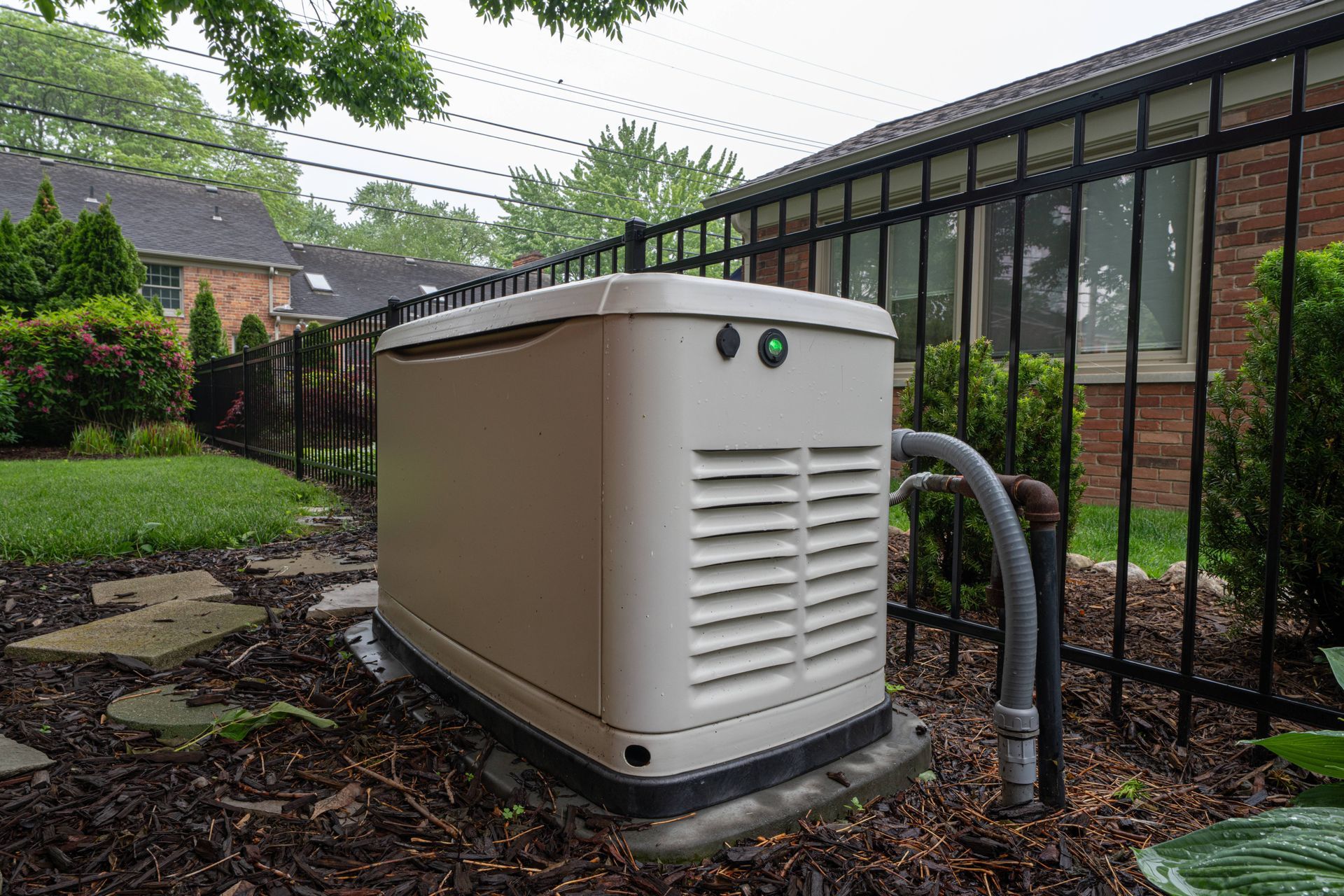
A home backup generator keeps the systems a household depends on running during an outage, from refrigeration and air conditioning to medical equipment and a sump pump. Texas heat pushes air conditioning hard for much of the year, so losing power for even a few hours can turn a house uncomfortable fast.
Additionally, a longer outage risks spoiled food or, in some cases, damage from heat and humidity. When sized correctly, your generator keeps everything running without worry.
How Do I Choose the Right Generator Size for My New Build?
Sizing a generator for your new home comes down to square footage, how many major appliances run at once, and whether the goal is powering the whole house or just the circuits that count most during an outage.
A home with a pool, a workshop, or a home office running specialized gear needs more capacity than a standard layout. Working this out during construction, instead of after move-in, makes wiring and placement less complicated down the road.
What Are the Fuel Options for a New Home Generator?
Backup generators for a new build usually run on natural gas or propane, and the right fit typically comes down to what utilities already reach the site:
- Natural gas taps directly into the home's existing line for a consistent fuel supply.
- Propane needs its own tank, but it works well for homes outside a gas service area.
Deciding on this early means the fuel line for the generator is installed during construction rather than added later, saving you from another construction project after you’ve moved in.
Where Should I Place My Generator During New Construction?
Planning generator placement before the slab gets poured saves cutting through finished landscaping down the road. Local code also usually sets minimum distances from windows, doors, and property lines, something an installer can map out alongside the home's electrical panel.
Coordinating with a builder early also means the pad and fuel line go in during the same phase as the rest of the site work.
Schedule Your Generator Installation Near Dallas-Fort Worth, TX, for Your New Home Today
Texas weather simply doesn’t wait for a convenient moment to cut the power, so be ready before it does, even in a new home.
At Premier Generators of Texas, our trained technicians work with new homeowners across the Dallas-Fort Worth area to size, install, and maintain residential generators designed around how their homes run. Our service team also handles maintenance and repairs for year-round peak performance.
Contact us online or call (214) 945-2525 to learn more about how our generator team can help during the new construction phase of your new home.
Premier Generators of Texas proudly serves Dallas, Fort Worth, Collin County, McKinney, Plano, Tarrant County, and Denton County, TX.