

Your Guide on How To Add a Reliable Home Generator
This winter has been a doozy for much of the U.S., including Texas. Folks in the Dallas-Fort Worth area faced yet another historic cold snap, with snow, sleet, and temperatures dropping into the teens. But those with reliable home generators were confident that a power outage wouldn’t compromise them. If you don’t have a generator, exploring your options will help you
prepare for the next power outage.
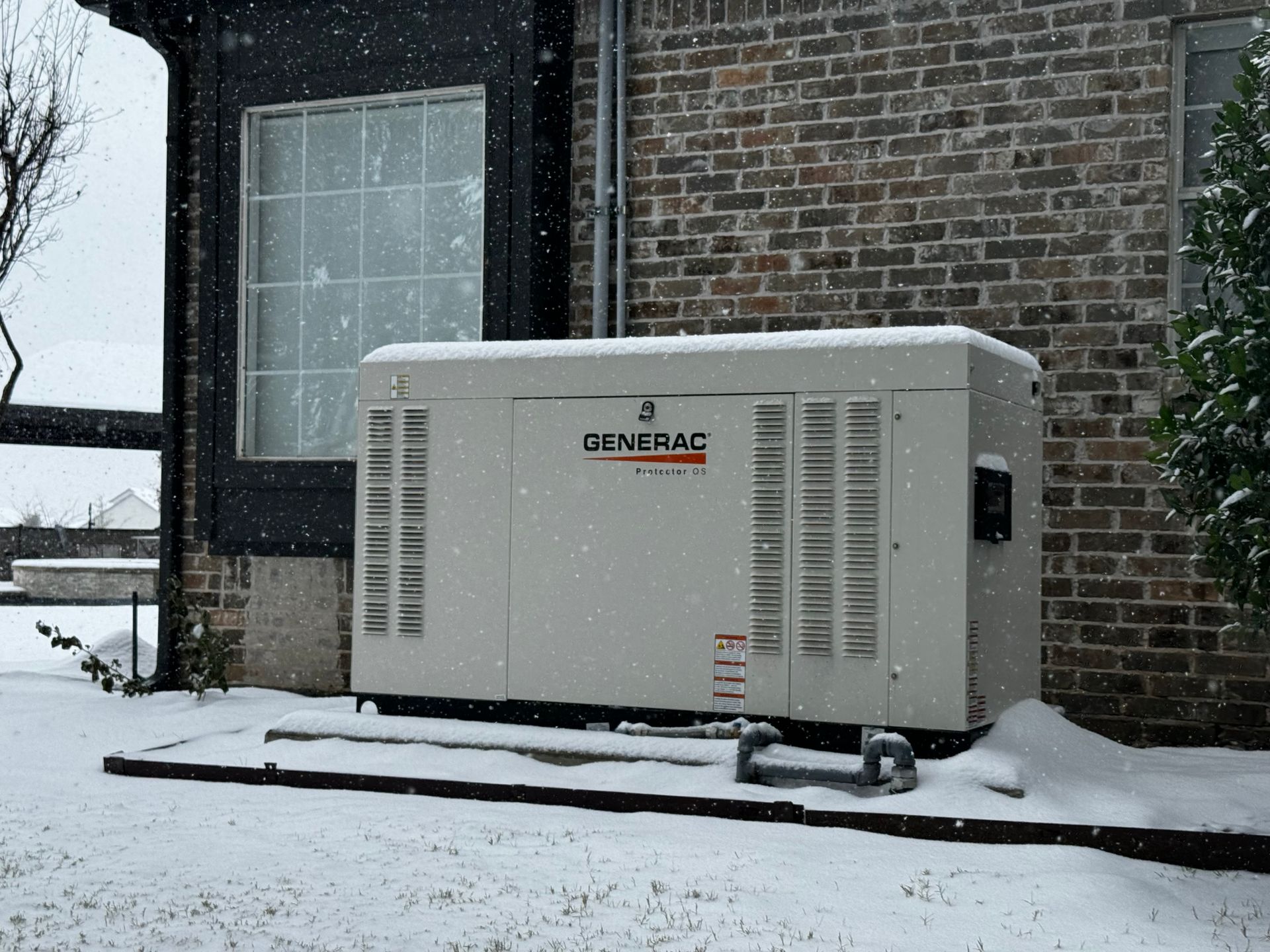
At Premier Generators of Texas, we help homeowners take control of their power security through professional installation and ongoing support. Our team prioritizes partnering with Texans from start to finish for reliable power you can count on when you need it, which is why we’ve compiled this step-by-step guide to help you begin your generator journey today.
Assessing Your Home’s Power and Generator Needs
A professional assessment starts with determining your household's power requirements. Our installers will walk through your property and catalog essential appliances, including:
- Refrigerators and deep freezers.
- HVAC systems.
- Water heaters.
- Medical devices.
- Security systems.
With this information, we’ll calculate the combined wattage to determine the minimum capacity your home needs.
Most residences require between 7,500 and 15,000 watts for basic operations, while larger properties with additional amenities may need 20,000 watts or more. During this consultation, we’ll discuss which circuits matter most during an outage.
Some families prioritize kitchen appliances and entertainment systems, while others focus solely on heating, cooling, and refrigeration. Your installer will use this data to recommend the size and type of generator that best fits your lifestyle.
Exploring the Advantages of Generac® Generators
As an industry-leading brand, Generac® has been manufacturing backup power systems since 1959, offering models ranging from compact units to whole-house systems. These home generators feature automatic transfer switches that detect outages within seconds and automatically start without manual intervention. So, they activate whether you're home or not.
The company offers air-cooled models for smaller homes and liquid-cooled systems for properties requiring higher power output.
Many standby generators run on either natural gas or propane connections, removing the need to store fuel or refill tanks during extended outages.
Planning Your Home Generator Installation
After you’ve chosen a model, our team will evaluate your property. A technician checks your electrical panel, gas lines, and outdoor space to find the best location. Generators need proper clearance from windows, doors, and air intake vents to avoid carbon monoxide from finding its way inside your home.
Additionally, local codes typically require a minimum of 18 inches from your exterior and 5 feet from any openings. Your Premier Generators of Texas installation team also handles the permits and schedules required inspections.
On the initial installation day, we'll pour a concrete pad or assemble a composite base to keep the unit level and stable, which is critical, as a solid foundation prevents vibration problems and helps the equipment last longer.
The electrical work connects the generator to your circuit breaker panel via a transfer switch, creating an isolated power source and preventing electricity from flowing back into the utility lines.
Understanding Home Generator Installation Timelines
Typically, an installation takes one to three days. Day one usually involves site preparation and foundation work. Our installers return once the concrete has cured to set the generator, connect the fuel lines, and complete the electrical hookups.
The final steps include testing the automatic transfer switch and programming the controller.
However, before your generator installation begins, gas line modifications sometimes extend this timeline, especially if your current service lacks sufficient capacity. A licensed plumber may need to upgrade your meter or run additional piping.
Protecting Your Investment
Generac® generators have built-in diagnostics that monitor oil levels, battery voltage, and operating temperatures. These self-tests keep the engine components lubricated and verify the system's readiness. You'll hear a brief run cycle, usually lasting about 12 minutes, which confirms everything works as it should.
For added protection, we offer annual
professional servicing that covers services like:
- Oil changes.
- Filter replacements.
- Spark plug inspections.
Our technicians also check gas connections, battery terminals, and coolant levels in liquid-cooled models. Following this yearly schedule prevents minor issues from turning into expensive repairs and keeps your warranty active.
Shop Generac® Generators for Homes Near Dallas-Fort Worth, TX
Living in picturesque Texas means preparing for unpredictable weather and occasional grid strain year-round. It’s important you don’t wait until there’s an emergency at hand to seek backup power you can count on. Your home or business needs a power solution that activates instantly and runs as long as necessary, and our Premier Generators of Texas team is here to help.
Contact us online or call (214) 945-2525 to request your quote today. Premier Generators of Texas proudly serves our local communities, including Dallas, Fort Worth, Collin County, McKinney, Plano, Tarrant County, and Denton County, TX.